




GFF አማርኛ (Amharic) Classic QWERTY Keyboard Help
Keyboard © Ge'ez Frontier Foundation.
Overview
This keyboard is designed for use with the Amharic language of Ethiopia in Africa. Typing follows a consonant-vowel pattern. It is designed for use with a standard (QWERTY) keyboard.
Most computers will automatically download a special font to display this keyboard correctly. However, if the layout or the charts below do not display correctly, please read the troubleshooting guide.
Click here to see keyboard layouts for other Ethiopic languages, like Awngi, Bench, Blin, Dizi, Ge'ez, Me'en, Mursi, Sebatbeit, Suri and Tigrigna.
Using this Keyboard
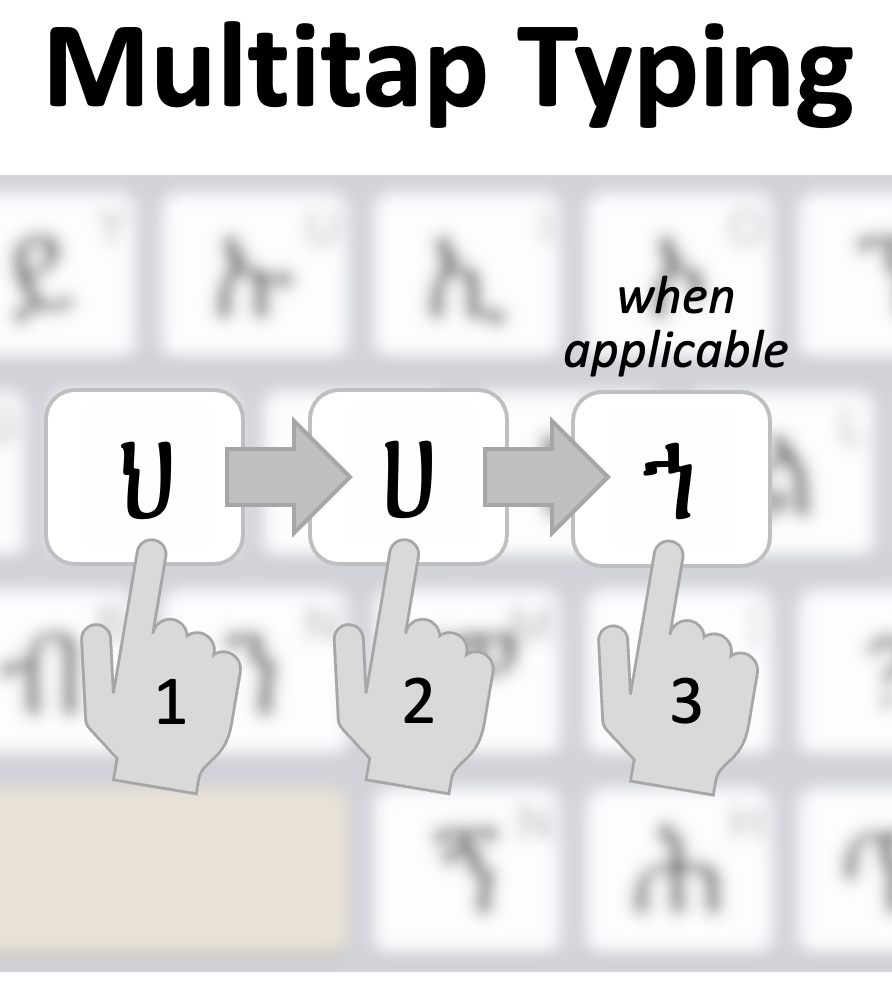
Quick Guide to Flicks and Taps
| Regular Keys | Related Keys | Number Keys | Control Keys | |
|---|---|---|---|---|
| 1 Tap | ብB ⮕ ብ | ንኝN ⮕ ን | 2፪ ⮕ 2 | |
| 2 Taps | ብB ⮕ በ | ንኝN ⮕ ነ | 2፪ ⮕ ፪ | |
| 3 Tap | ንኝN ⮕ ኘ | 2፪ ⮕ ፳ | ||
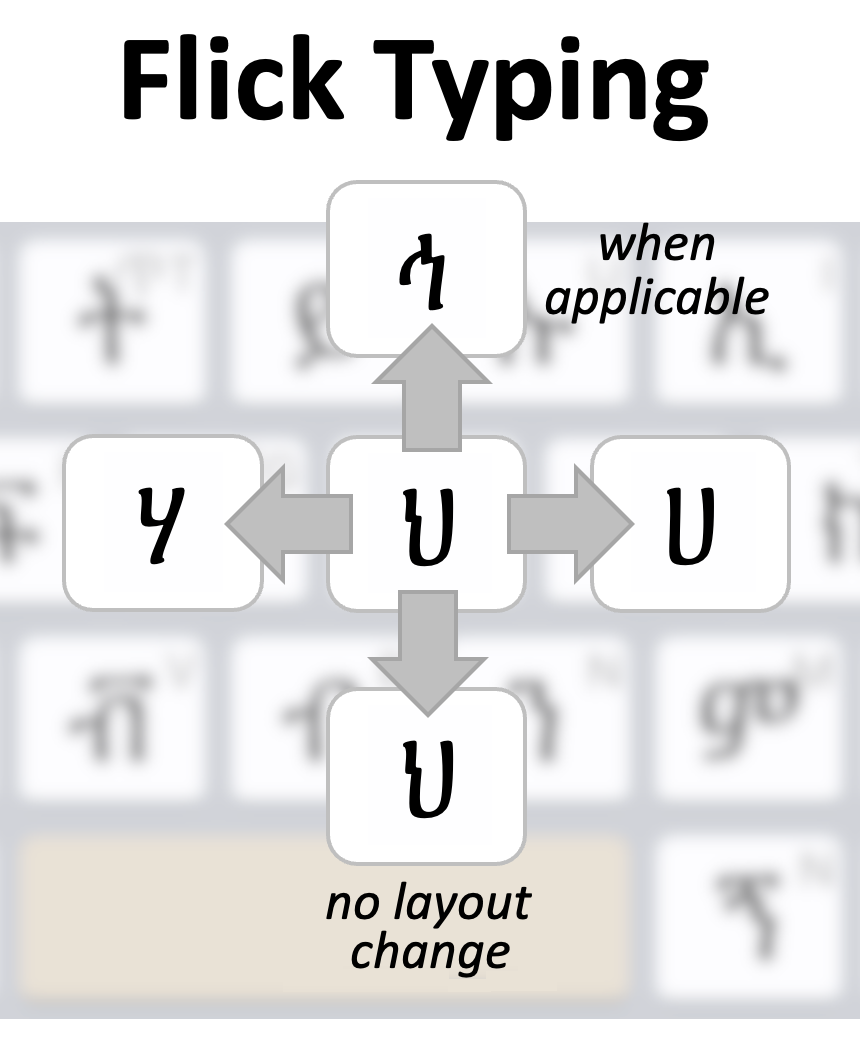
| ↓ Flick | ብB ⮕ ብ | ንኝN ⮕ ን | 2፪ ⮕ ፪ | ⟲ (return to start) |
| ↑ Flick | ንኝN ⮕ ኝ | 2፪ ⮕ ፳ | ⟲ (return to start) | |
| → Flick | ብB ⮕ በ | ንኝN ⮕ ነ | ⟲ (return to start) | |
| ← Flick | ብB ⮕ ባ | ንኝN ⮕ ና | ⟲ (return to start) |
For a detailed overview, select your device from the list below to read the appropriate manual:
📱 Mobile (Phone)
Mobile Phone Keyboard
Letters
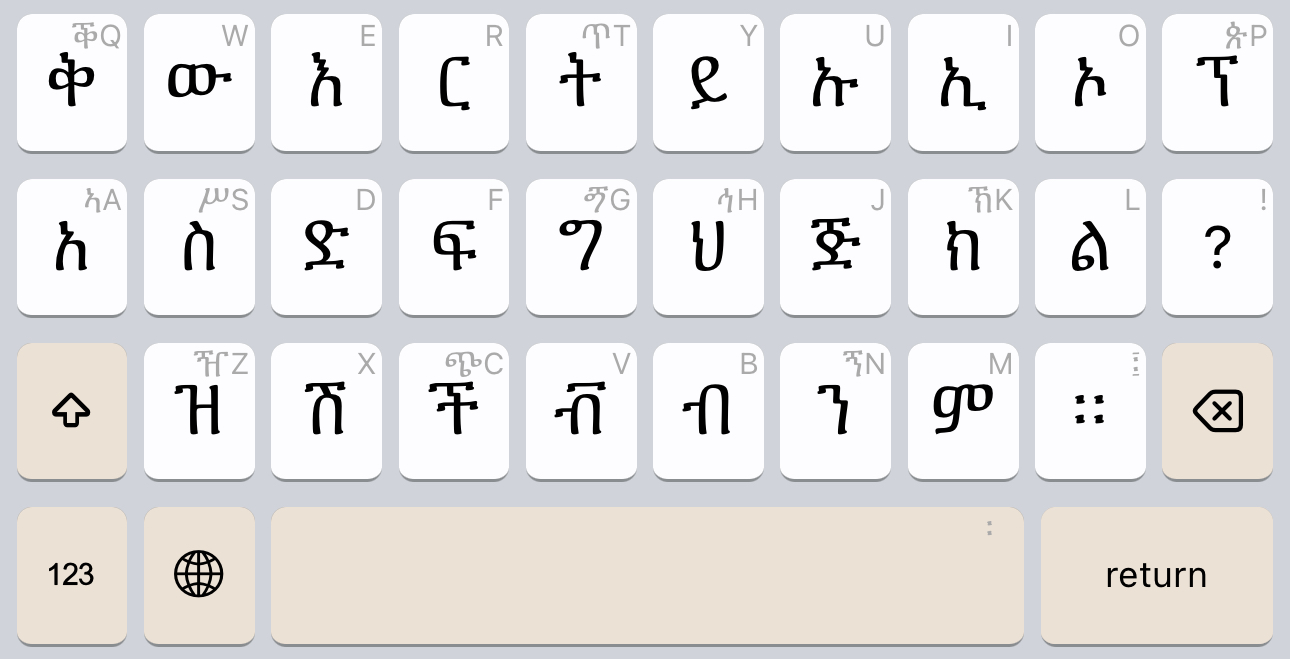
When the GFF Amharic Classic QWERTY mobile keyboard starts, the key layout appears as shown in the following image. The layout follows the Latin QWERTY style of typing as used in desktop and laptop computers. Note the Latin letters in the top right corner of the keys (called a “hint”):
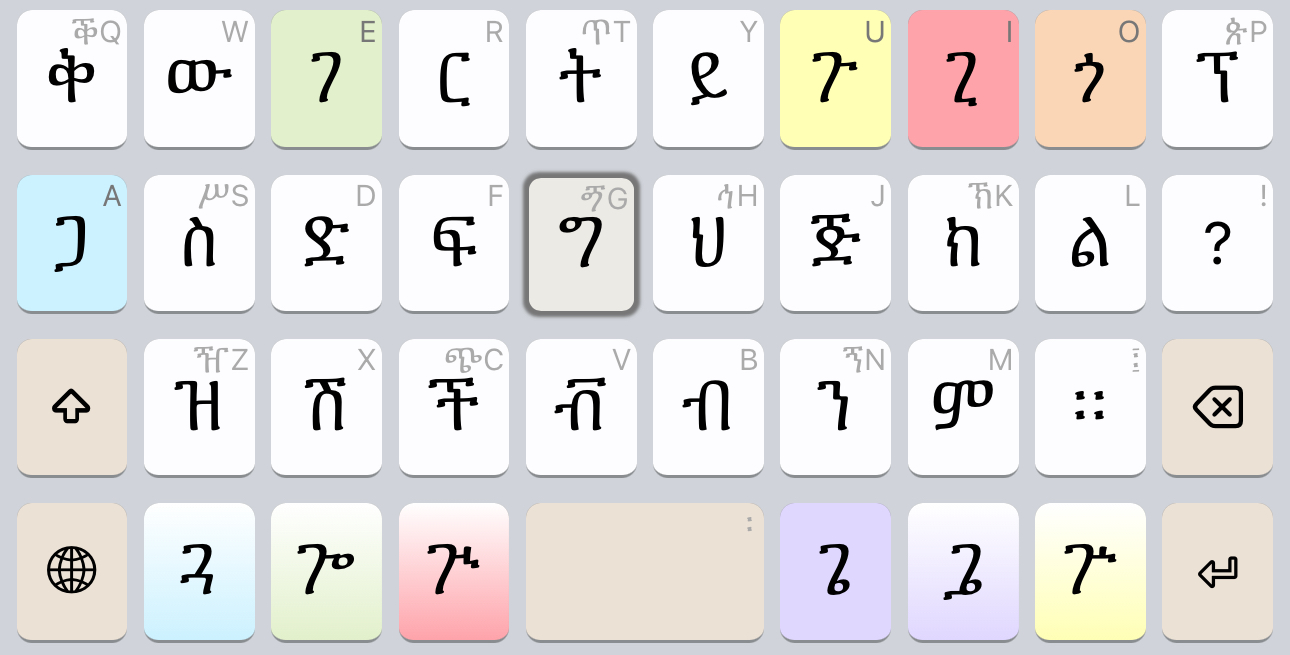
Tapping a key once, the vowel keys (አ, ኡ, ኢ, ኣ, ኤ, and ኦ) will change to show what related letter will come next when typed. For example, tapping ግ the vowel keys change to ገ, ጉ, ጊ, ጋ, ጌ, and ጎ . If the updated vowel keys is tapped, ግ will be updated on screen.
Shifting
As with typing Amharic on computers with Latin keyboards, the shift, ⇧, key is used to type related letters. Notice that the “hint” on some keys will show which letter is available on that key when shifted. For example, the ‘ት’ key appears with 2 hints, ትጥT, ‘T’ is the usual Latin keyboard letter, and ‘ጥ’ becomes the Amharic letter on the key after pressing ⇧. The shift layout is shown below:

Long Presses
Another way to type a letter, that does not change the vowel keys, is to hold a key down for a few moments (called a “longpress”) a pop-up menu appears where you can tap the letter desired. The pop-up menu for ግ is shown below:
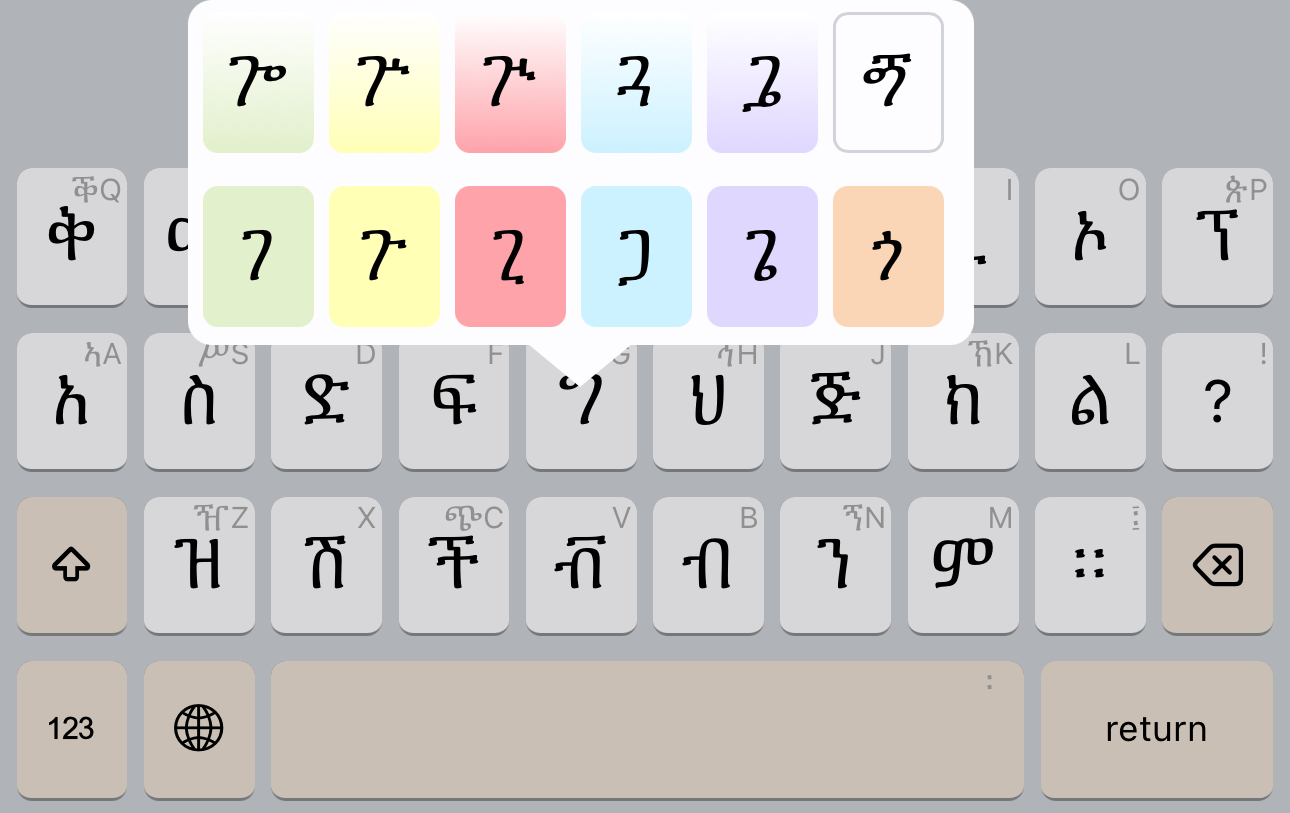
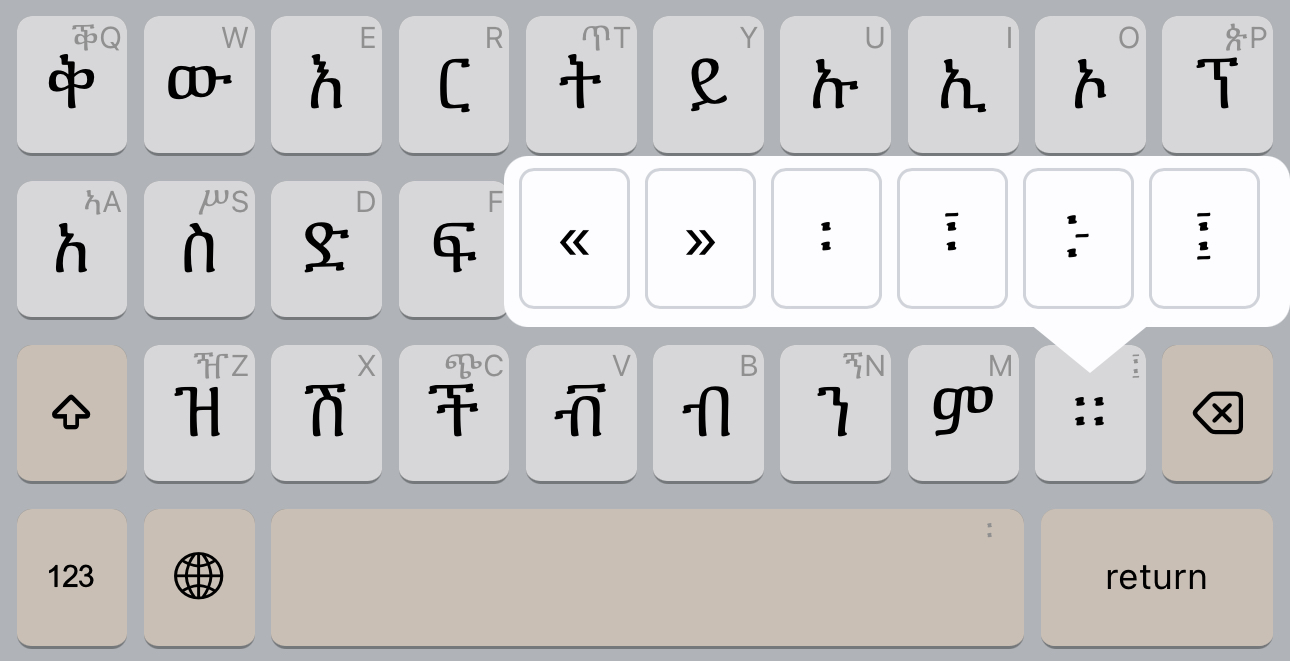
The punctuation keys, ። and ? will also have longpress pop-ups help type more punctuation easily. The punctuation for a longpress of ።:
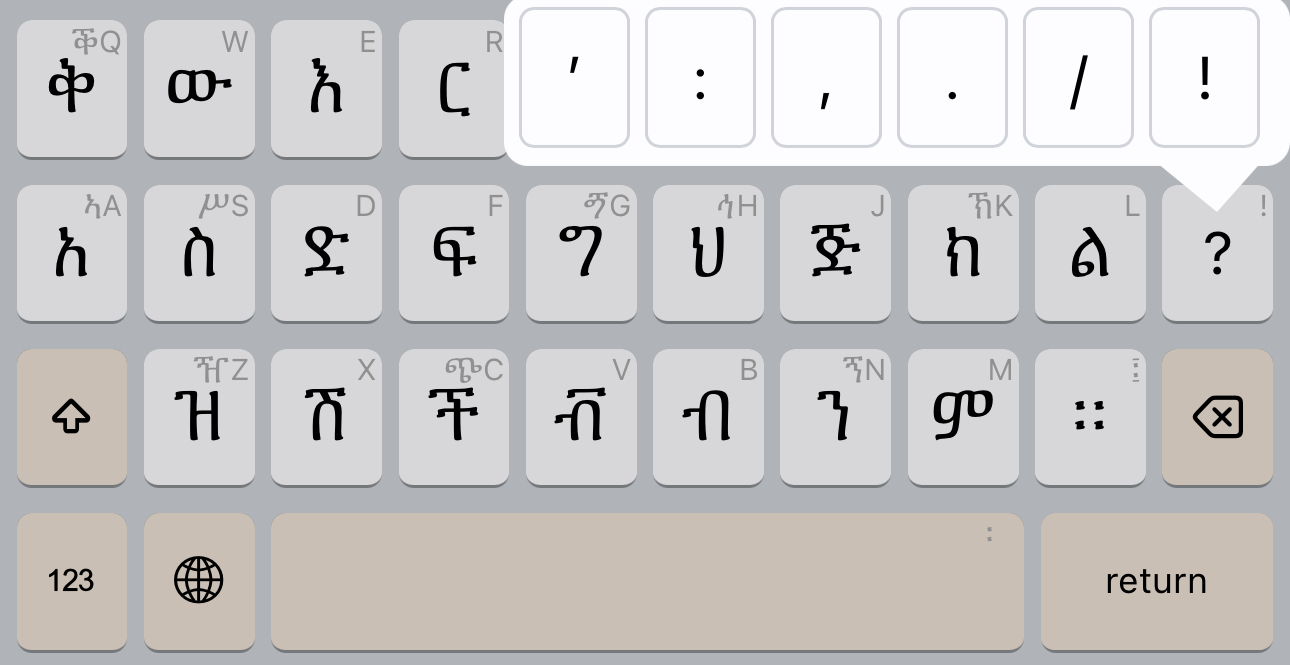
The punctuation for a longpress of ?:
For additional letters that would be typed with a shift on a laptop keyboard, tap the 123 key to shift to the next layer:
Tapping
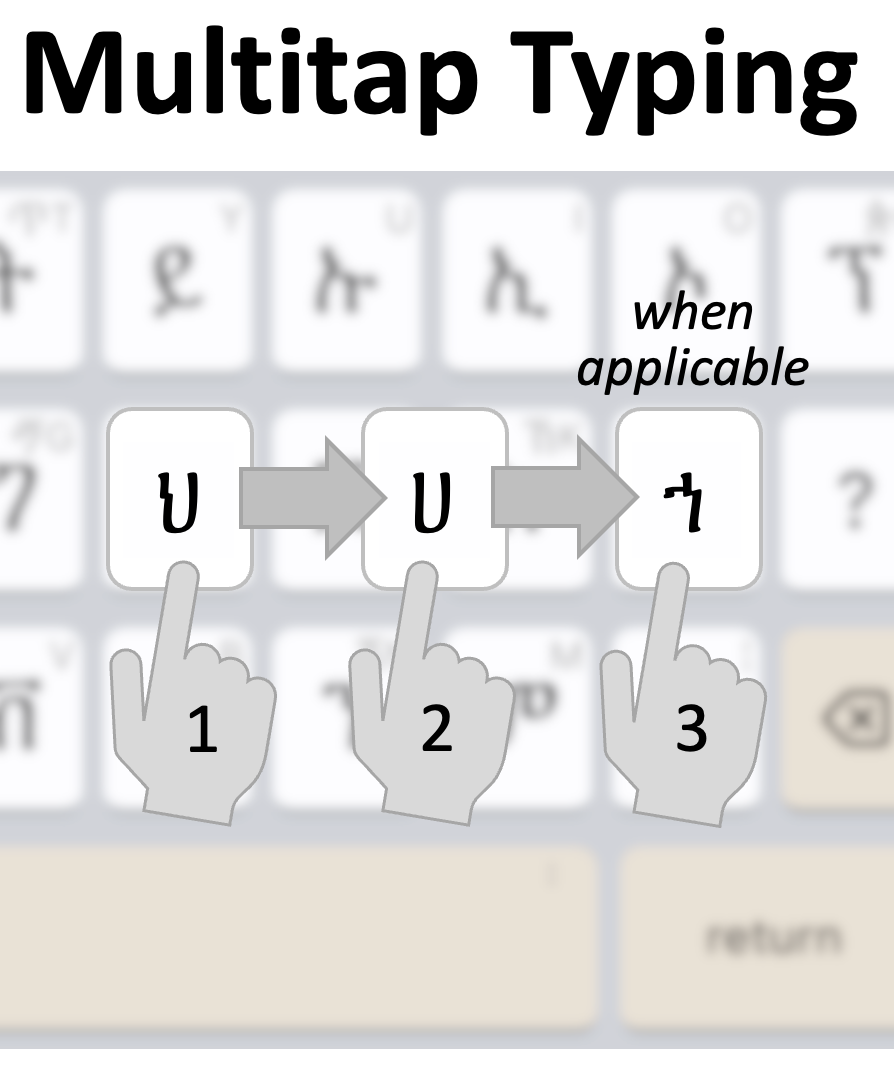
By default, the keyboard keys enter the 6th order (ሳድስ) letter because the are the most frequent in Amharic vocabulary. Tapping a key quickly twice, a “Double-Tap”, will enter the 1st order (ግዕዝ) letter (the next most frequently occurring). When a letter has a hint, a “Triple-Tap” is also possible where the third tap will enter the hint letter in the first order. For example, the ‘ን’ key has the hint ‘ኝN’, appearing as ንኝN, tapping the key produces:
- ንኝN 1 tap: ን
- ንኝN 2 taps: ነ
- ንኝN 3 taps: ኝ
In other cases, such as for punctuation or numerals, multiple-taps can be used in addition to a flick to type the symbol shown in the hint. For example, the ‘2’ key has the hint ‘፪’, appearing as 2፪, tapping the key produces:
- 2፪ 1 tap: 2
- 2፪ 2 taps: ፪
- 2፪ 3 taps: ፳
Flicking
Key “flicking” is widely supported throughout the keyboard. A flick is a quick stroke (like a swipe) made on the key usually in the downward direction, but also upward, and side to side. Flicks are very convenient since they can save you from having to shift to the next keyboard view to access a letter, or avoid additional typing motions that become fatiguing. Most every key will support a flick in some way.
Flicks on letter keys
Keys with hints can be “flicked” to type the symbol shown in the hint.
- ↓ flicking the ብB key will type ‘ብ’ without changing the vowels.
- → flicking the ብB key will type ‘በ’
- ← flicking the ብB key will type ‘ባ’
- ↑ flicking the ስሥ key will type ‘ሥ ’ instead of ‘ስ’ (and change the vowels).
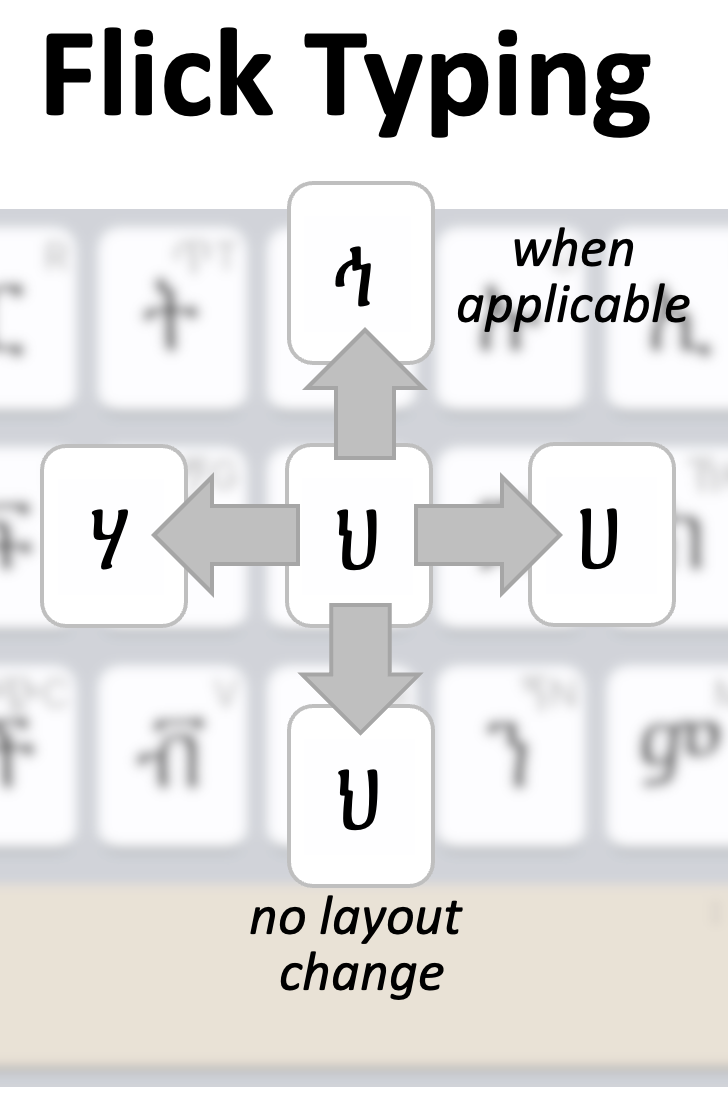
Flicks on other keys
On other keys, such as punctuation and number keys, a downward flick will will enter the symbol shown in the hint. For example, ↓-flicking the $€ key will type ‘€’ instead of ‘$’. The flick options will mirror those on iPhone and iPad keyboards. On the number keys after pressing the 123 key, downward and upward flicks work to enter the Geʾez numbers following:
- 2፪ ↑-flick: ፪
- 2፪ ↓-flick: ፳
Return flicks
Any of the special keys, such as ⇧, space, ⌫, return, and others on the bottom row of the keyboard, can be flicked in any direction to return to the starting keyboard position. For example, from any keyboard view on the screen, flicking ← , → or ↓ on the space key will bring the keyboard back to its starting point.
A special return flick is also provided on a key after typing it. For example, after typing the ግ key and seeing the vowel letters change, a ↓ on ግ will bring the keyboard back to the start (instead of entering ‘ግ’ as a ↓ flick normally would).
Punctuation
For additional punctuation and numerals, tap the 123 key to shift to the next layer:
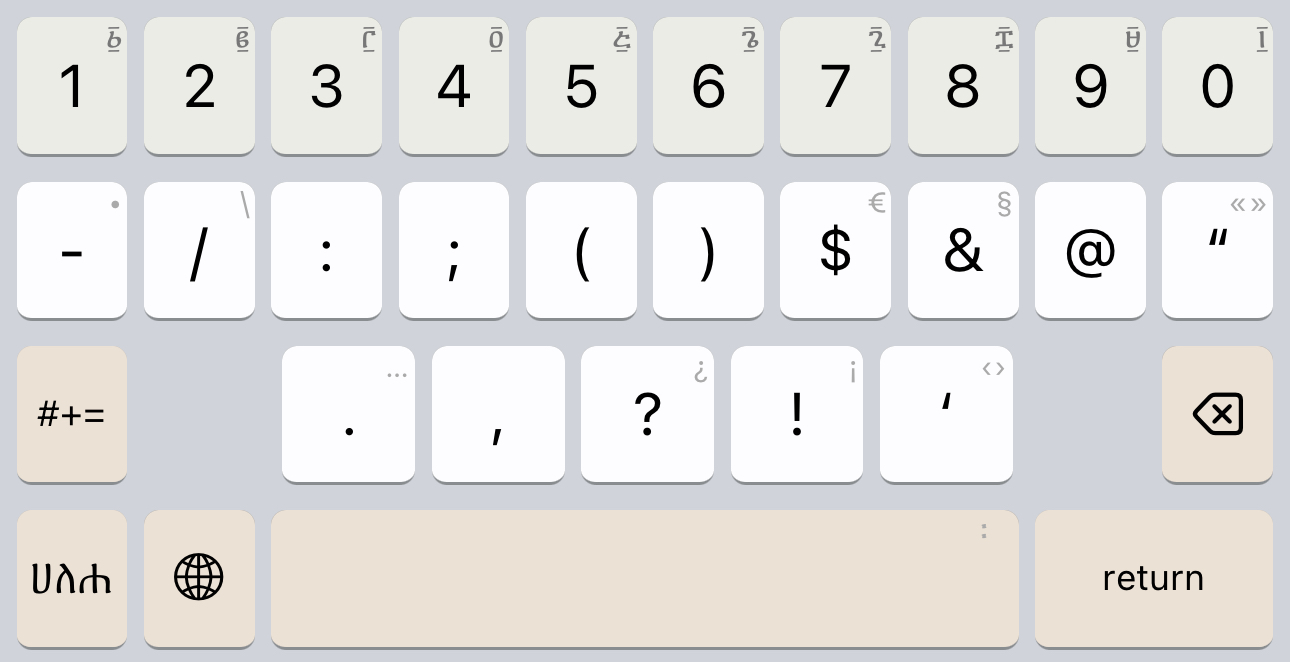
For additional punctuation and numerals, tap the #+= key to shift to the next layer:
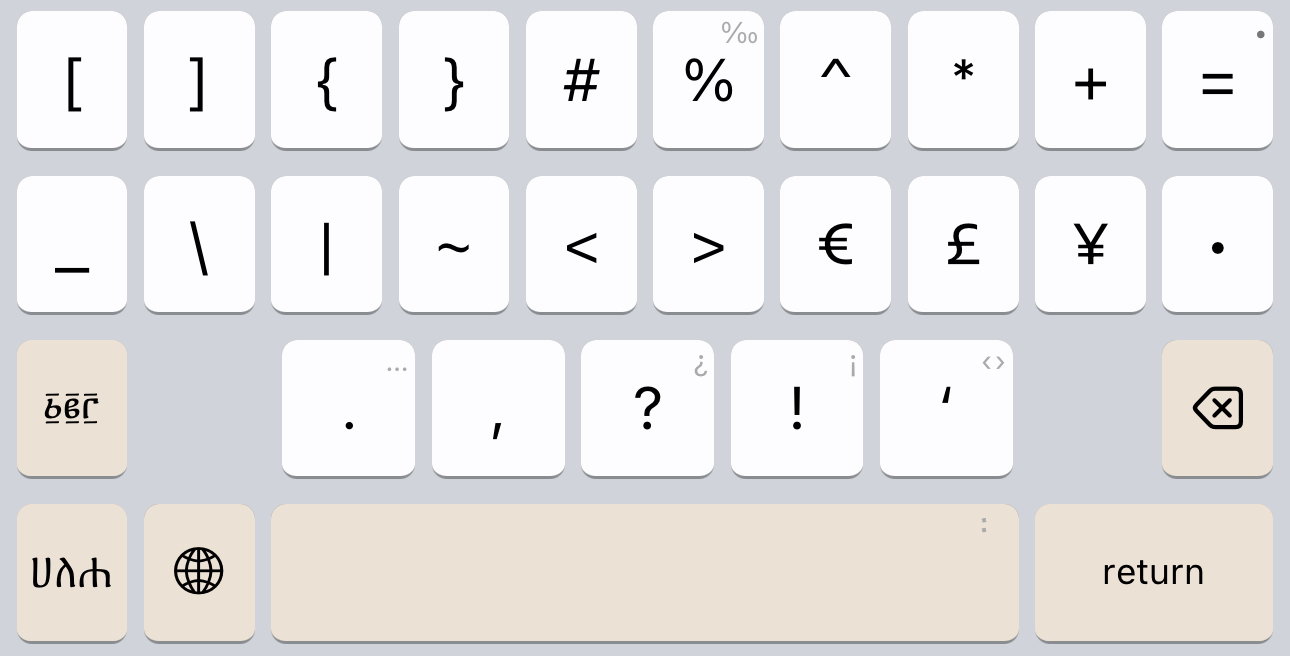
Note that numerals on the punctuation layer use the longpress feature to make Geʾez numerals available:
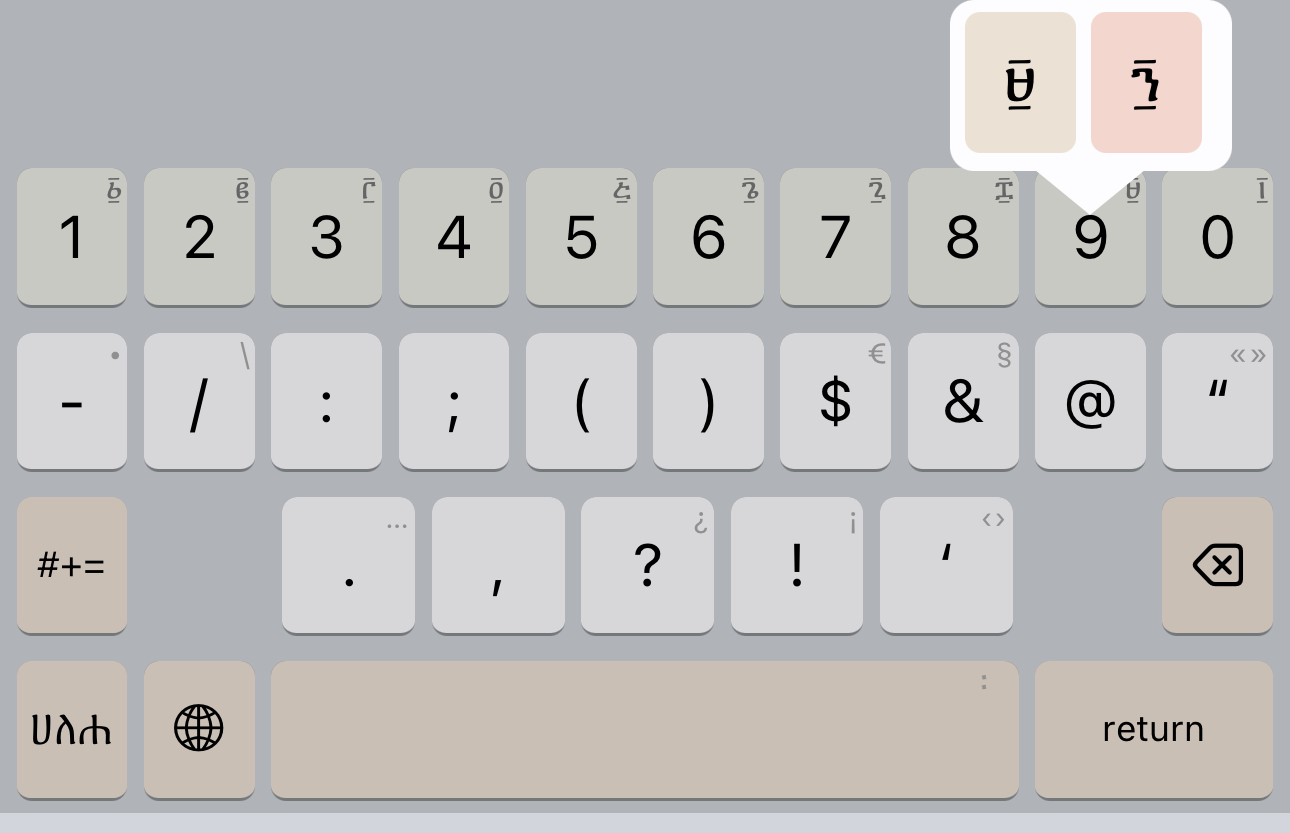
A tap of the ፩፪፫ key will go to the final layer where Geʾez numbers and some less used symbols can be accessed.
Numerals
The last layer to shift to presents the Geʾez numbers, all Geʾez punctuation, letters of related languages, and a few lesser used letters that did not fit conveniently on the initial letters layer.
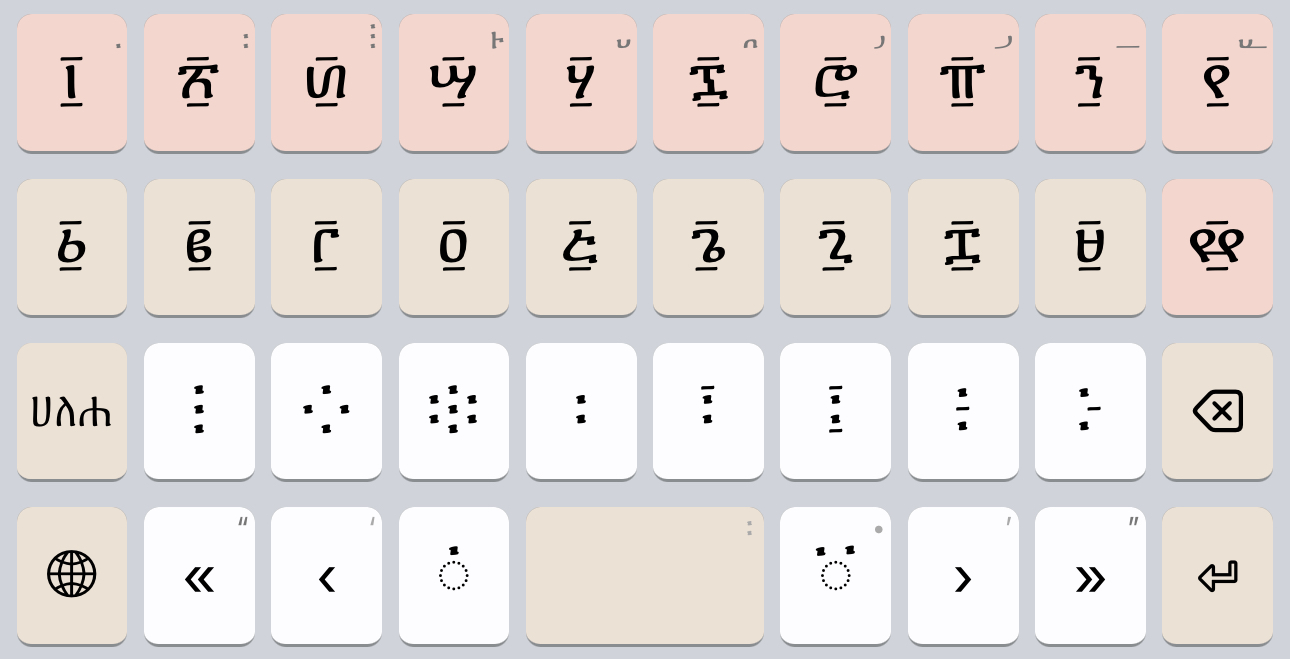
Simply tap the ሀለሐ key to return to the starting letters layers.
🔲 Tablet
Tablet Keyboard
Letters
When the GFF Amharic Classic QWERTY mobile keyboard starts, the key layout appears as shown in the following image. The layout follows the Latin QWERTY style of typing as used in desktop and laptop computers. Note the Latin letters in the top right corner of the keys (called a “hint”):
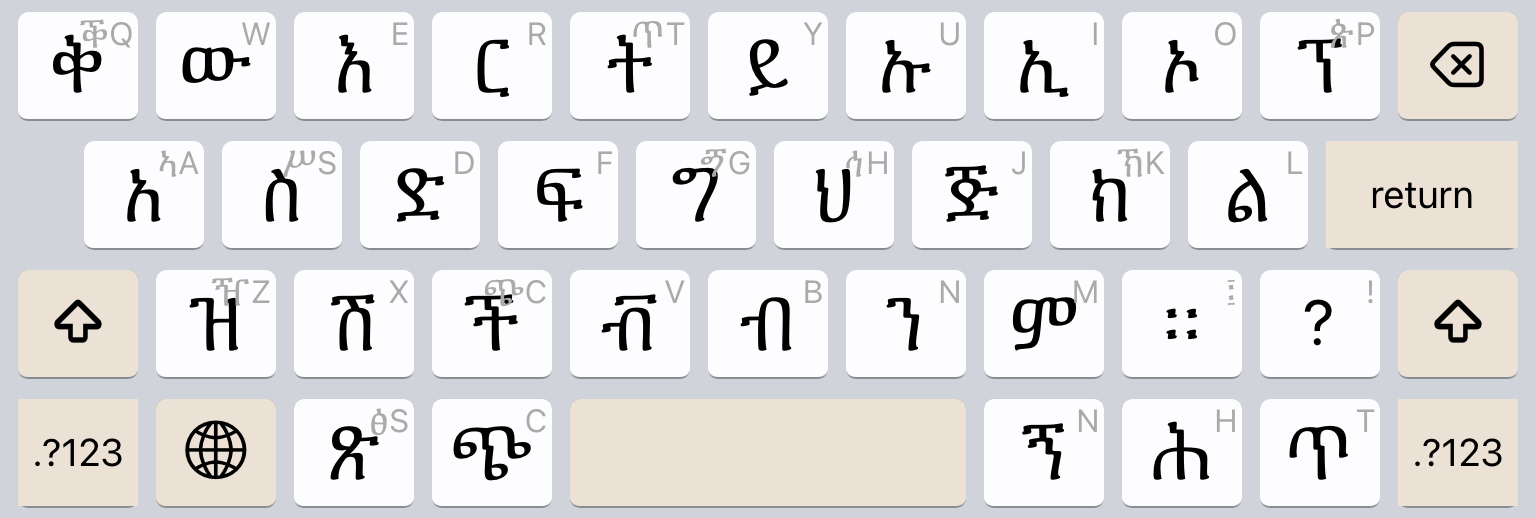
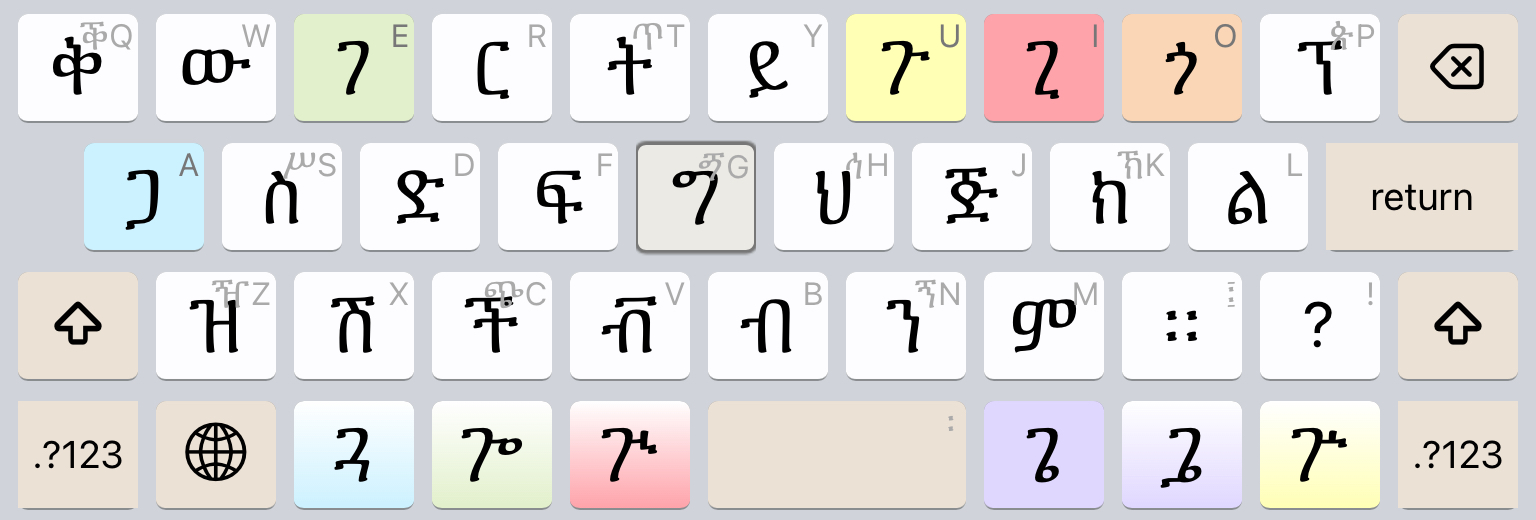
Tapping a key once, the vowel keys (አ, ኡ, ኢ, ኣ, ኤ, and ኦ) will change to show what related letter will come next when typed. For example, tapping ግ the vowel keys change to ገ, ጉ, ጊ, ጋ, ጌ, and ጎ . If the updated vowel keys is tapped, ግ will be updated on screen.
Observe that some keys have a small “hint” letter in the upper right corner. The hint letters can be typed by making a quick, light, downward “flick” on the key. These letters can also be typed using the “lonpgress” approach explained in a following example.
Shifting
As with typing Amharic on computers with Latin keyboards, the shift, ⇧, key is used to type related letters. Notice that the “hint” on some keys will show which letter is available on that key when shifted. For example, the ‘ት’ key appears with 2 hints, ትጥT, ‘T’ is the usual Latin keyboard letter, and ‘ጥ’ becomes the Amharic letter on the key after pressing ⇧. The shift layout is shown below:
Long Presses
Another way to type a letter, that does not change the vowel keys, is to hold a key down for a few moments (called a “longpress”) a pop-up menu appears where you can tap the letter desired. The pop-up menu for ግ is shown below:
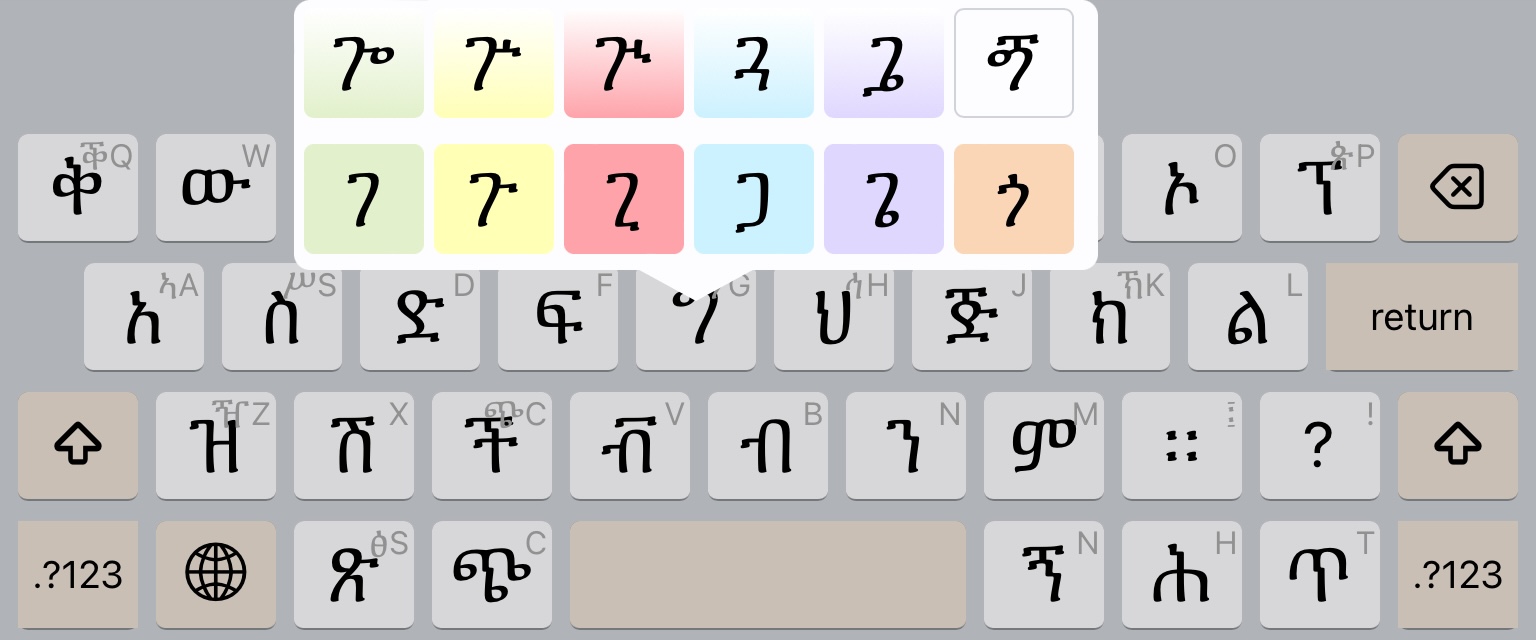
The punctuation keys, ። and ? will also have longpress pop-ups help type more punctuation easily. The punctuation for a longpress of ።:
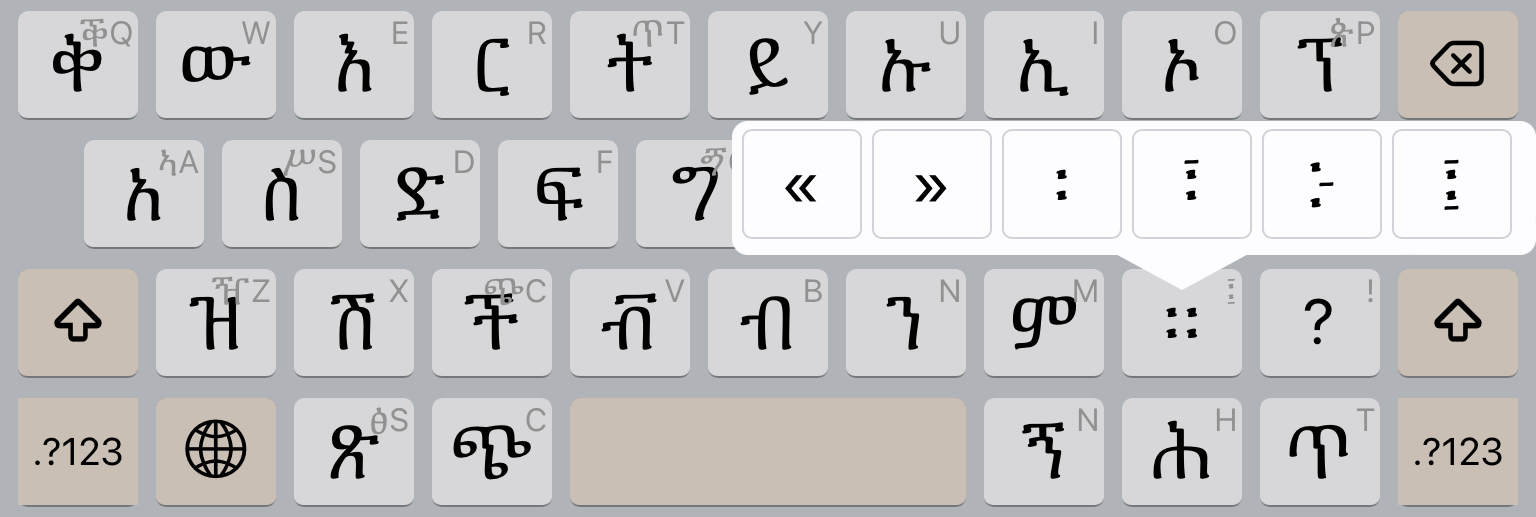
The punctuation for a longpress of ?:
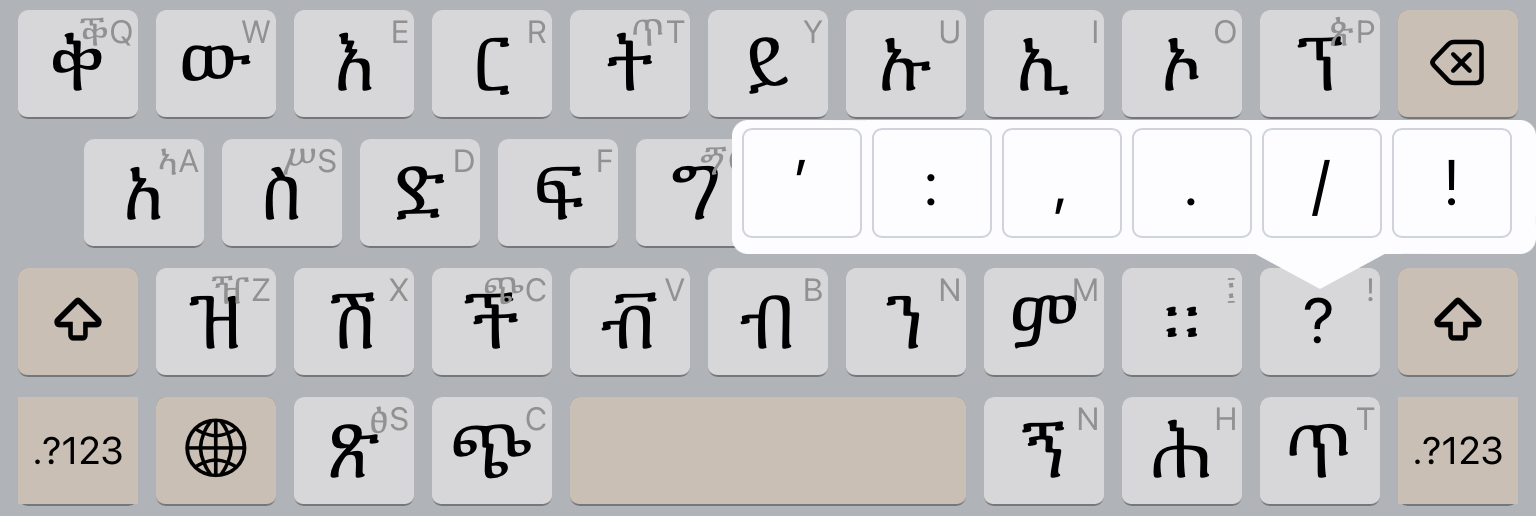
For additional letters that would be typed with a shift on a laptop keyboard, tap the .?123 key to shift to the next layer:
Tapping
By default, the keyboard keys enter the 6th order (ሳድስ) letter because the are the most frequent in Amharic vocabulary. Tapping a key quickly twice, a “Double-Tap”, will enter the 1st order (ግዕዝ) letter (the next most frequently occurring). When a letter has a hint, a “Triple-Tap” is also possible where the third tap will enter the hint letter in the first order. For example, the ‘ን’ key has the hint ‘ኝN’, appearing as ንኝN, tapping the key produces:
- ንኝN 1 tap: ን
- ንኝN 2 taps: ነ
- ንኝN 3 taps: ኝ
In other cases, such as for punctuation or numerals, multiple-taps can be used in addition to a flick to type the symbol shown in the hint. For example, the ‘2’ key has the hint ‘፪’, appearing as 2፪, tapping the key produces:
- 2፪ 1 tap: 2
- 2፪ 2 taps: ፪
- 2፪ 3 taps: ፳
Flicking
Key “flicking” is widely supported throughout the keyboard. A flick is a quick stroke (like a swipe) made on the key usually in the downward direction, but also upward, and side to side. Flicks are very convenient since they can save you from having to shift to the next keyboard view to access a letter, or avoid additional typing motions that become fatiguing. Most every key will support a flick in some way.
Flicks on letter keys
Keys with hints can be “flicked” to type the symbol shown in the hint.
- ↓ flicking the ብB key will type ‘ብ’ without changing the vowels.
- → flicking the ብB key will type ‘በ’
- ← flicking the ብB key will type ‘ባ’
- ↑ flicking the ስሥ key will type ‘ሥ ’ instead of ‘ስ’ (and change the vowels).
Flicks on other keys
On other keys, such as punctuation and number keys, a downward flick will will enter the symbol shown in the hint. For example, ↓-flicking the $€ key will type ‘€’ instead of ‘$’. The flick options will mirror those on iPhone and iPad keyboards. On the number keys after pressing the .?123 key, downward and upward flicks work to enter the Geʾez numbers following:
- 2፪ ↑-flick: ፪
- 2፪ ↓-flick: ፳
Return flicks
Any of the special keys, such as ⇧, space, ⌫, return, and others on the bottom row of the keyboard, can be flicked in any direction to return to the starting keyboard position. For example, from any keyboard view on the screen, flicking ← , → or ↓ on the space key will bring the keyboard back to its starting point.
A special return flick is also provided on a key after typing it. For example, after typing the ግ key and seeing the vowel letters change, a ↓ on ግ will bring the keyboard back to the start (instead of entering ‘ግ’ as a ↓ flick normally would).
Punctuation
When typing letters, the ? and ። keys are available for entering the most common punctuation without shifting to another “layer”. The following image shows the punctuation for a longpress of ?:
The punctuation for a longpress of ።:
For additional punctuation and numerals, tap the .?123 key to shift to the next layer:
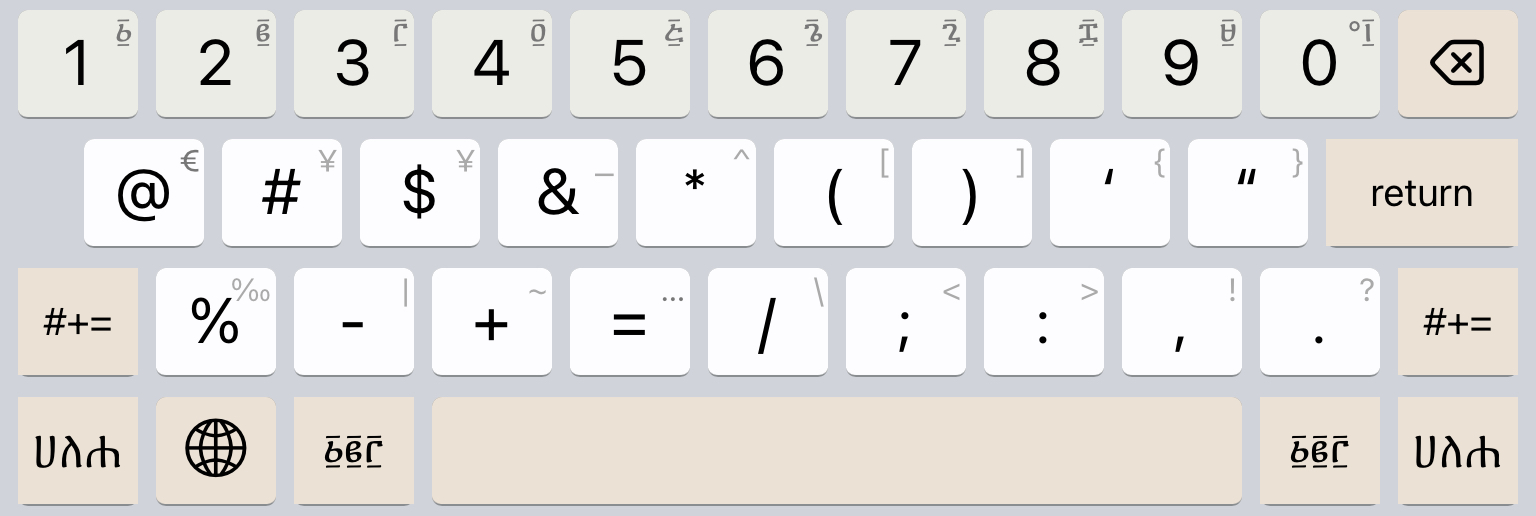
For additional punctuation and numerals, tap the #+= key to shift to the next layer:
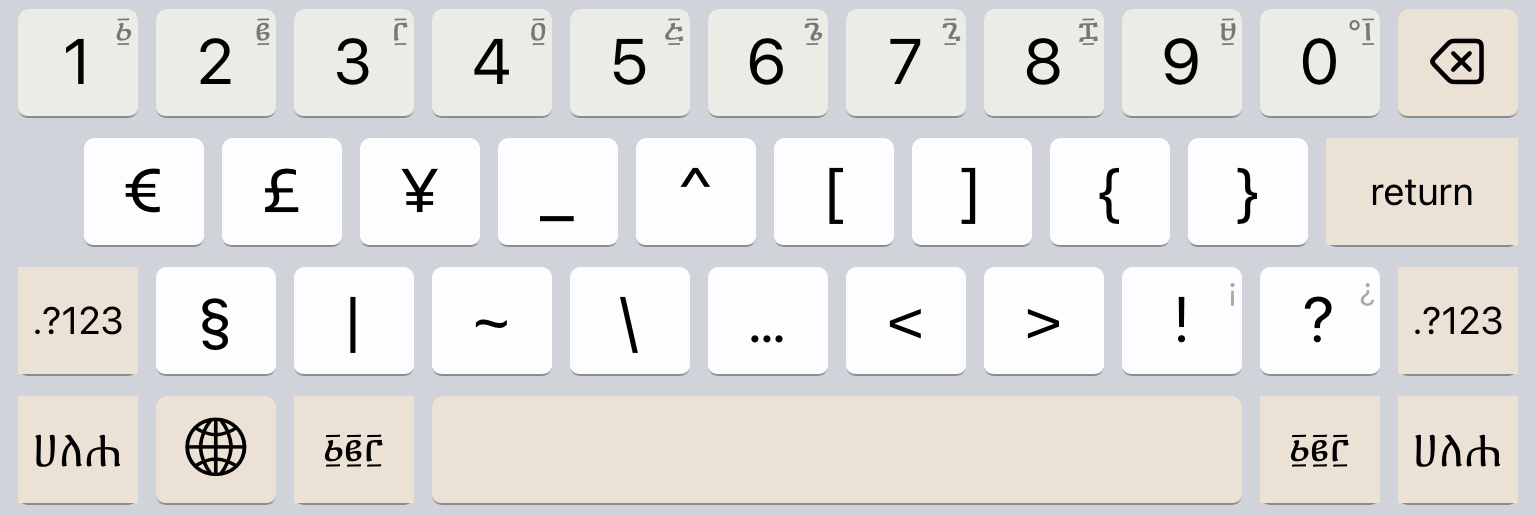
A tap of the ፩፪፫ key will go to the final layer where Geʾez numbers and some less used symbols can be accessed.
Numerals
The last layer to shift to presents the Geʾez numbers, all Geʾez punctuation, letters of related languages, and a few lesser used letters that did not fit conveniently on the initial letters layer.
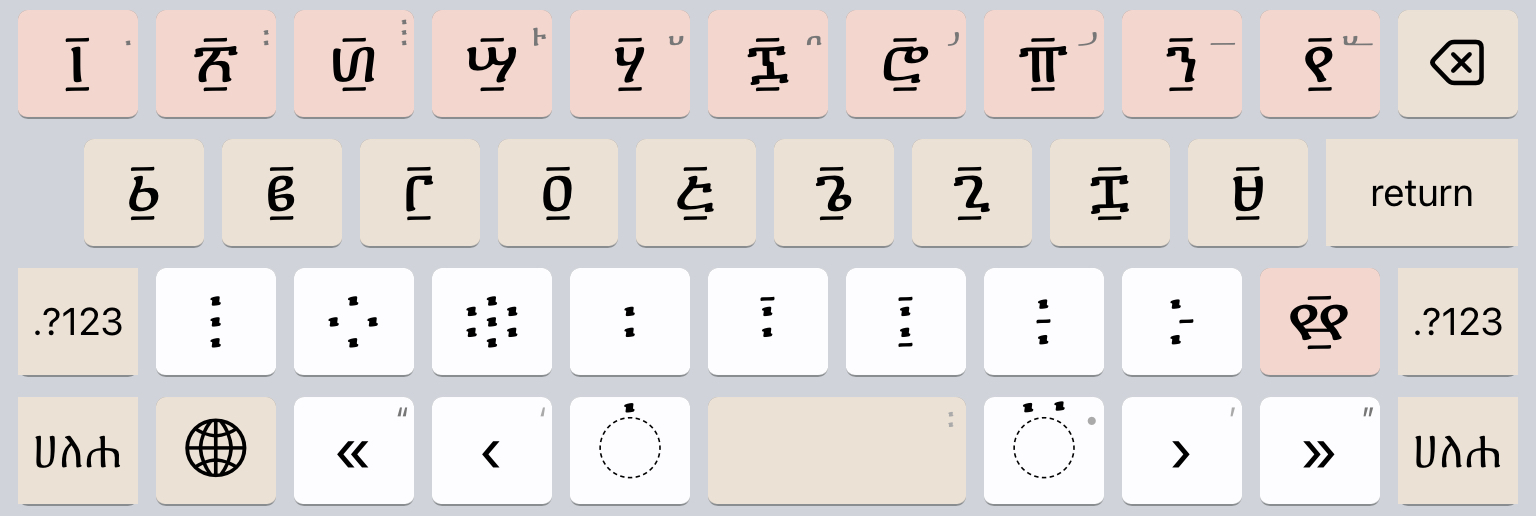
Simply tap the ሀለሐ key to return to the starting letters layers.
Troubleshooting
If the characters you type or those on the On Screen Keyboard do not appear to display correctly, please read the KeymanWeb troubleshooting guide.
For any other questions, contact us.
Further Resources
Related Keyboard Layouts
Keyboard Layouts for other Ethiopic languages:
Harege Fidelat (All Languages)
Mesobe Fidelat (All Languages)
Awngi
Bench
Blin
Dizi
Geʾez
Gurage
Meʾen
Mursi
Suri
Tigrigna (Eritrea)
Tigrigna (Ethiopia)
Technical Information
System Requirements
It is recommended that you use an English QWERTY hardware keyboard with this keyboard.
Unicode Version
This keyboard complies with Unicode 4.1
Keyboard Authorship
This keyboard was created by the Ge'ez Frontier Foundation. SIL Global graciously acknowledges the contribution made by the authors in developing this keyboard and making it freely available for use with Keyman Mogile and KeymanWeb. Their effort assists in enabling people to communicate in their own language.
Copyright and Terms of Use
The Amharic Classic QWERTY keyboard layout for Keyman Mobile and KeymanWeb is copyright © Ge'ez Frontier Foundation. It may be freely distributed and used under the terms of The MIT License.
All Documentation Versions
- GFF አማርኛ (Amharic) Classic QWERTY Keyboard Help 3.0
- GFF አማርኛ (Amharic) Classic QWERTY Keyboard Help 2.0
